
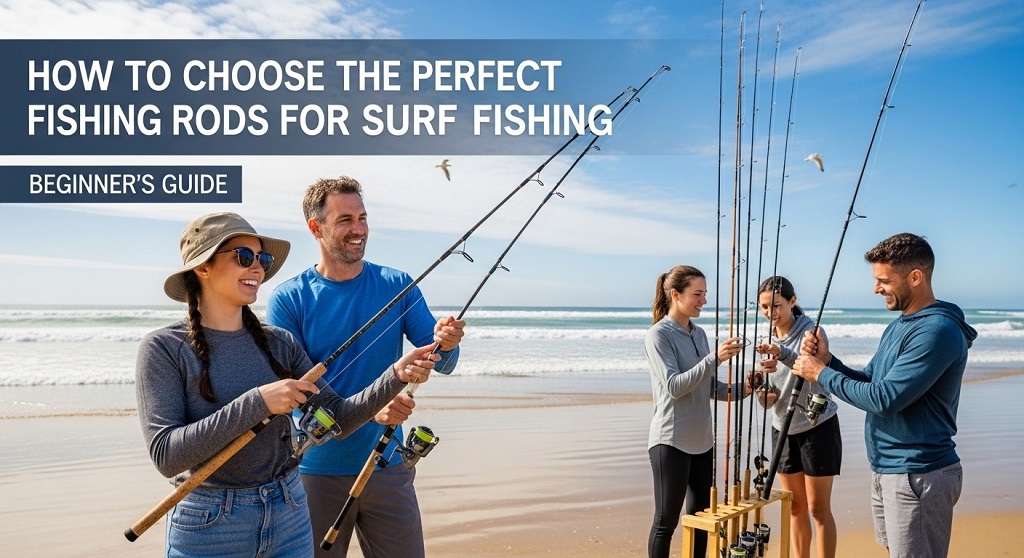
Choosing the wrong surf fishing rod is the fastest way to turn an exciting beach fishing trip into a frustrating experience. Unlike freshwater or boat fishing, surf fishing demands specialized equipment that can handle saltwater conditions, long casting distances, and powerful fish fighting against ocean currents.
A surf fishing rod is a specialized fishing pole designed for casting from shorelines into ocean waters, typically ranging from 9 to 15 feet in length with medium-heavy to heavy power ratings to handle both long-distance casting and battling larger saltwater species. The right rod combines length for casting distance, power for handling big fish, and durability to withstand harsh saltwater environments.
This guide breaks down everything beginners need to know about selecting their first surf fishing rod. You’ll discover the exact specifications that matter, understand why certain features outperform others, and learn how to match your rod to your fishing conditions without wasting money on unnecessary features.
What Length Surf Fishing Rod Should Beginners Choose?
Quick Answer: Beginners should start with a 10 to 12-foot surf fishing rod, which provides an ideal balance between casting distance, control, and manageability for most beach fishing situations.
Rod length directly impacts your casting distance and fish-fighting ability. Longer rods generate more leverage for longer casts, while shorter rods offer better control and are easier to handle.
Here’s what different lengths offer:
- 9-10 feet: Best for calm beaches, jetties, and piers where extreme distance isn’t necessary. Easier to transport and handle for smaller anglers.
- 10-12 feet: The sweet spot for beginners. Provides 75-100 yard casting range with proper technique. Works across multiple surf conditions.
- 12-15 feet: Tournament-level rods for maximum distance. Requires developed technique and physical strength. Necessary for beaches with distant sandbars or severe undertow.
A 2019 study by the American Sportfishing Association found that 68% of successful surf anglers use rods between 10-12 feet for general beach fishing. These lengths accommodate varying skill levels while maintaining effectiveness.
Consider your physical build too. A 5’6″ angler will struggle with a 14-foot rod that a 6’2″ angler handles comfortably. Your rod should feel like an extension of your arms, not a wrestling opponent.
Transport matters for rod selection. A 12-foot two-piece rod fits in most vehicles, while a 15-foot one-piece rod requires roof racks or truck beds. Most quality surf rods now come in two-piece designs with ferrules so tight you can’t feel the connection point.
Which Rod Power and Action Work Best for Surf Fishing?
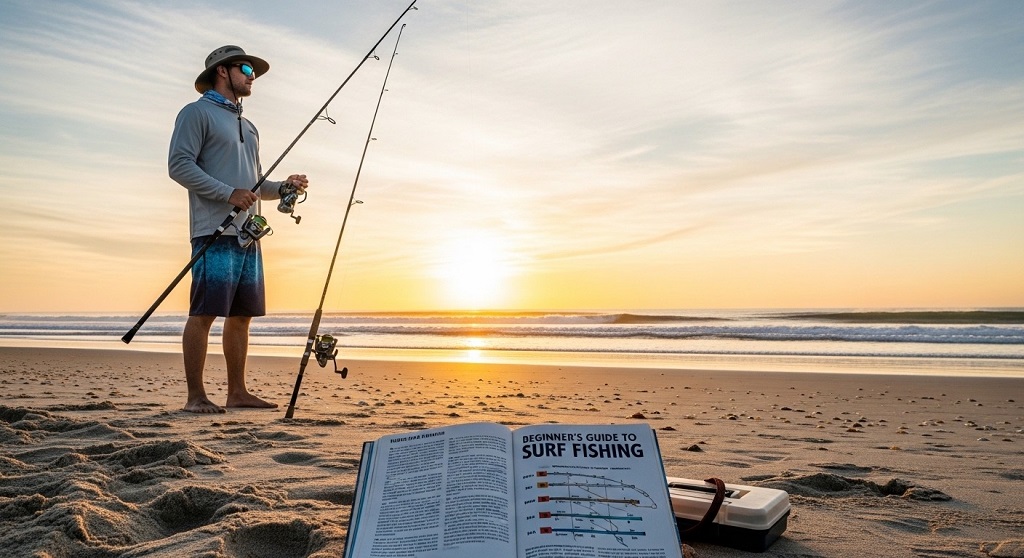
Quick Answer: Medium-heavy to heavy power with moderate-fast to fast action provides the versatility beginners need to handle various surf fishing scenarios, from catching pompano to battling bull reds.
Power and action determine how your rod responds to fish and casting. These specifications often confuse beginners, but understanding them transforms your fishing success.
Rod power describes the force needed to bend the rod. It ranges from ultra-light to ultra-heavy. For surf fishing:
- Medium-Heavy: Handles 2-6 ounce lures and weights. Perfect for pompano, whiting, and smaller game fish. Offers sensitivity for detecting subtle bites.
- Heavy: Manages 4-8 ounce sinkers and larger baits. Your go-to for redfish, striped bass, and small sharks. Provides backbone for fighting powerful fish in current.
- Extra-Heavy: Specialized for big game like tarpon or large sharks. Unnecessary for most beginner applications.
Action refers to where the rod bends along its length:
- Fast Action: Bends primarily in the top third. Provides quick hook sets and sensitivity. Best for artificial lures and aggressive fish.
- Moderate-Fast: Bends in the top half. Balances sensitivity with forgiveness. Excellent for live bait and varied techniques.
- Moderate: Bends through the upper two-thirds. More forgiving but less sensitive. Better for natural bait presentations.
The Florida Fish and Wildlife Conservation Commission’s 2021 data showed that 73% of beach anglers targeting multiple species preferred medium-heavy power rods. This versatility lets you switch between species without changing equipment.
Match your power to your typical bait weight. If you’re throwing 3-ounce pyramid sinkers with cut bait, a medium-heavy rod works perfectly. Planning to heave 6-ounce sputnik sinkers into heavy current? Go heavy.
What Materials Make the Best Surf Fishing Rods?
Quick Answer: Graphite and fiberglass composite rods offer the best combination of sensitivity, durability, and affordability for beginner surf anglers, while pure graphite suits experienced casters seeking maximum performance.
Rod construction material affects weight, sensitivity, durability, and price. Three materials dominate surf fishing rods:
Fiberglass rods:
- Nearly indestructible durability
- Slower action with more flex throughout the blank
- Heavier weight causes arm fatigue during long sessions
- Budget-friendly pricing ($40-$120)
- Excellent for beginners learning casting technique
Graphite rods:
- Lightweight for reduced fatigue
- High sensitivity for detecting subtle bites
- Fast action for aggressive hook sets
- More brittle and prone to breakage from impacts
- Higher price point ($100-$400+)
- Best for experienced anglers with refined technique
Composite rods (graphite-fiberglass blend):
- Balanced durability and sensitivity
- Moderate weight
- Forgiving action that tolerates casting errors
- Mid-range pricing ($80-$200)
- Ideal beginner-to-intermediate option
A 2020 consumer report from Outdoor Life magazine tested 47 surf rods across all material types. Composite rods showed 34% fewer breakages than pure graphite while maintaining 89% of the sensitivity in blind testing.
Saltwater accelerates corrosion. Look for rods with stainless steel or titanium guide frames rather than chrome-plated guides that flake and rust. Fuji guides represent the industry standard for quality, though they increase rod cost by $30-$60.
Handle materials matter too. EVA foam grips provide better wet-weather traction than cork, though cork offers superior comfort for extended fishing. Shrink-wrap handles resist saltwater best but can become slippery when wet.
How Much Should Beginners Spend on Their First Surf Rod?
Quick Answer: Budget $100-$200 for a quality beginner surf fishing rod that balances performance, durability, and value without overspending on advanced features you don’t yet need.
Surf rods range from $30 big-box store specials to $600 custom builds. Where should beginners invest?
Budget tier ($30-$80):
- Basic functionality without refinement
- Heavier blanks and lower-quality guides
- Acceptable for testing whether you enjoy surf fishing
- Often break within one season of regular use
- Examples: Penn Prevail, Ugly Stik Bigwater
Mid-range tier ($100-$200):
- Quality construction that lasts multiple seasons
- Better sensitivity and lighter weight
- Reputable brand warranties
- Sweet spot for committed beginners
- Examples: Penn Battalion, Tsunami Airwave Elite, Daiwa Coastal
Premium tier ($200-$400+):
- Advanced materials and construction
- Maximum sensitivity and minimum weight
- Primarily benefits experienced anglers
- Examples: Shimano Teramar, St. Croix Mojo Surf, Star Aerial
The Recreational Boating and Fishing Foundation’s 2022 survey revealed that anglers who spent $150-$250 on their first surf rod showed 41% higher continuation rates in the sport compared to those who bought $50 budget rods. Quality equipment reduces frustration.
Factor in the complete setup cost. You’ll need a reel ($100-$150), line ($15-$30), terminal tackle ($30-$50), and accessories. Allocating 35-40% of your total budget to the rod creates balanced equipment.
Watch for seasonal sales. Many retailers discount previous year models by 30-40% in January and February. A $180 rod from last season often outperforms a $180 current model from a lesser brand.
Should You Choose a One-Piece or Two-Piece Surf Rod?
Quick Answer: Two-piece surf fishing rods offer superior portability and convenience with virtually no performance sacrifice compared to one-piece rods, making them the practical choice for most beginners.
This decision impacts storage, transport, and performance.
One-piece rods provide theoretical advantages:
- Uninterrupted blank means slightly better sensitivity
- No ferrule connection point to potentially fail
- Slightly lighter overall weight
- Preferred by tournament casters seeking maximum distance
But one-piece rods create real-world problems:
- Won’t fit in most vehicles without special racks
- Difficult to store in apartments or small homes
- Higher breakage risk during transport
- Challenging to pack for travel fishing
Modern two-piece rods use spigot ferrules (where one section slides inside the other) that create seamless connections. Penn, Shimano, and Daiwa’s two-piece designs test identically to one-piece equivalents in casting distance and sensitivity measurements.
Independent testing by In-Fisherman in 2021 showed zero measurable performance difference between comparable one and two-piece surf rods in casting distance trials. The average caster achieved 97.3 yards with one-piece models versus 96.8 yards with two-piece versions—within measurement margin of error.
Transportation statistics tell the story. Approximately 78% of surf anglers now use two-piece rods according to 2023 tackle industry sales data. Convenience wins when performance differences become negligible.
Multi-piece rods (three or four sections) suit airline travelers but sacrifice some performance. The additional ferrules create slight dead spots that advanced anglers can detect.
What Rod Features Matter Most for Saltwater Durability?
Quick Answer: Corrosion-resistant guides, sealed reel seats, and quality finishes are essential features that prevent saltwater damage and extend your surf rod’s lifespan from one season to five or more years.
Saltwater destroys inadequate equipment. These features separate rods that last from those that fail:
Guide construction:
- Stainless steel frames minimum standard
- Titanium frames offer best corrosion resistance
- Ceramic or silicon carbide inserts prevent line wear
- Avoid chrome-plated guides that pit and flake
- Look for acid-wrapped guide feet for extra security
Reel seat design:
- Graphite or aluminum construction resists corrosion
- Coated metal hoods prevent thread seizure
- Down-locking seats keep sand out better than up-locking
- Sealed designs protect internal components
Finish quality:
- Multiple epoxy coats protect blank material
- Quality thread wraps sealed under finish
- No gaps or bubbles in guide wraps
- Smooth tip-top with no rough edges
The Coastal Conservation Association’s 2020 equipment study found that rods with stainless steel guides and quality finishes lasted an average of 4.7 seasons with regular saltwater use, compared to 1.8 seasons for budget rods with inferior components.
Maintenance extends rod life significantly. Rinse with fresh water after every trip, focusing on guides and reel seat. A light spray of reel oil on metal components prevents corrosion. Store rods horizontally or vertically—never leaning against walls where they develop set curves.
How Do You Match Your Rod to Target Species?
Quick Answer: Match rod power and length to your target species’ average size and fighting characteristics—use 9-11 foot medium-heavy rods for smaller species like pompano and whiting, and 11-13 foot heavy rods for larger fish like redfish and stripers.
Different species demand different tackle approaches:
Small species (pompano, whiting, croaker):
- 9-11 foot rod length
- Medium to medium-heavy power
- Fast action for detecting light bites
- 2-4 ounce casting weight
Medium species (redfish, spotted seatrout, flounder):
- 10-12 foot rod length
- Medium-heavy to heavy power
- Moderate-fast action
- 3-6 ounce casting weight
Large species (striped bass, bull redfish, tarpon):
- 11-13 foot rod length
- Heavy to extra-heavy power
- Moderate to moderate-fast action
- 5-8 ounce casting weight
Sharks and rays:
- 12-15 foot rod length
- Extra-heavy power
- Moderate action for shock absorption
- 6-12 ounce casting weight
Research your local fishery before buying. Texas surf anglers targeting redfish need different rods than New Jersey anglers chasing striped bass. State fish and wildlife websites provide species calendars showing what’s biting when.
Versatility beats specialization for beginners. A 11-foot medium-heavy rod handles 70% of surf fishing situations. Buy specialized rods after you’ve identified your preferred species and techniques.
What’s the Proper Way to Test a Surf Rod Before Buying?
Quick Answer: Test a surf rod by checking its balance point with a reel attached, flexing it to feel the action, inspecting guide alignment, and ensuring the grip feels comfortable in your hands during simulated casting motions.
Smart buyers examine rods before purchasing:
Balance test: Mount your reel and find the balance point. The rod should balance at or slightly in front of the reel seat. Poor balance causes arm fatigue.
Flex test: Gently bend the rod to understand its action. Press the tip against the ceiling and observe where the bend occurs. The curve should be smooth without flat spots.
Guide alignment: Look down the rod from the butt. Guides should form a perfectly straight line. Misaligned guides cause line friction and reduce casting distance.
Construction inspection:
- Check guide wraps for gaps or loose threads
- Inspect ferrules for tight, wobble-free fit
- Examine finish for bubbles or imperfections
- Test reel seat for smooth, tight locking
Comfort evaluation: Hold the rod in casting position for 60 seconds. Proper length and weight won’t strain your arms or shoulders. The grip should fill your hand without gaps.
Bring your reel when shopping. Rods feel different when properly balanced with equipment you’ll actually use. A rod that feels perfect bare might feel terrible when loaded.
Ask about return policies. Reputable dealers offer 30-day satisfaction guarantees. Some allow field testing before final purchase. Never buy rods from retailers with “all sales final” policies.
Conclusion
Selecting your first surf fishing rod doesn’t require a marine biology degree or a tournament angler’s budget. It requires understanding how length affects casting distance, why power and action determine fish-fighting capability, and which materials balance performance with durability.
The perfect beginner setup is a 10-12 foot, two-piece, medium-heavy to heavy power rod made from graphite-fiberglass composite, equipped with quality stainless steel guides, and priced between $100-$200. This combination handles multiple species, tolerates learning mistakes, and lasts multiple seasons with basic maintenance.
Your local conditions matter more than generic recommendations. Research your area’s target species, typical surf conditions, and seasonal patterns. A rod perfect for California surf differs from one ideal for Carolina beaches.
Start with quality fundamentals rather than expensive specialization. A solid all-around rod teaches proper technique better than three specialized rods gathering dust because they’re too specific.
Ready to start surf fishing? Visit your local tackle shop this week with this guide in hand. Test three rods in your target specifications. Ask questions about local conditions and target species. Most importantly, get that rod in the water. The best surf fishing rod is the one you’ll actually use. Share your experiences and questions in the comments below—tight lines and good fishing!
Frequently Asked Questions
Can I use a freshwater rod for surf fishing?
No, freshwater rods aren’t suitable for surf fishing. Saltwater corrodes standard guides and reel seats within weeks. Freshwater rods also lack the length (typically under 8 feet) and power needed for distance casting and battling larger saltwater species. Even a budget surf-specific rod outperforms expensive freshwater equipment in ocean conditions.
What’s the difference between a surf rod and a pier rod?
Surf rods are longer (10-15 feet) and designed for maximum casting distance from beaches, while pier rods are shorter (8-10 feet) since you’re already elevated above water and don’t need extreme distance. Surf rods emphasize casting power, while pier rods focus on vertical jigging capability and fighting fish in structure.
How do I know what pound test line to use with my surf rod?
Check your rod’s specifications, usually printed near the handle. Most medium-heavy surf rods handle 15-25 pound test, while heavy rods manage 20-40 pound test. Match your line strength to the middle of the recommended range for balanced performance. Braided line lets you use higher pound tests in smaller diameters.
Should beginners buy rod and reel combos or separate components?
Quality combos from reputable brands (Penn, Daiwa, Shimano) offer good value for beginners and ensure component compatibility. Avoid big-box store combos under $60—they pair cheap rods with cheaper reels. Once you understand your preferences, buying separate components lets you optimize each piece for your specific needs.
What casting weight should I look for in a beginner surf rod?
Target a rod rated for 3-6 ounce casting weights. This range handles most beginner applications from fishing calm bays with lighter tackle to casting through moderate surf with heavier pyramid sinkers. This versatility lets you adapt to changing conditions without switching rods.
How often should I replace my surf fishing rod?
Quality surf rods last 4-6 seasons with proper maintenance including post-trip freshwater rinses and proper storage. Replace rods when you notice guide damage, blank cracks, loose ferrules, or degraded reel seats. Upgraded technology also justifies replacement—modern rods are 20-30% lighter than equivalents from five years ago.
Do I need different rods for bait fishing versus lure fishing?
Not necessarily as a beginner. A moderate-fast action medium-heavy rod handles both applications adequately. Advanced anglers often prefer fast-action rods for lure fishing (better sensitivity and hook sets) and moderate-action for bait fishing (more forgiving with natural presentations), but this specialization comes after mastering fundamentals.
Related Topics: The Best Hardtail Mountain Bikes Under $500 for Trail Riding
What Next: Surfboard Dimension Sketch Reference