
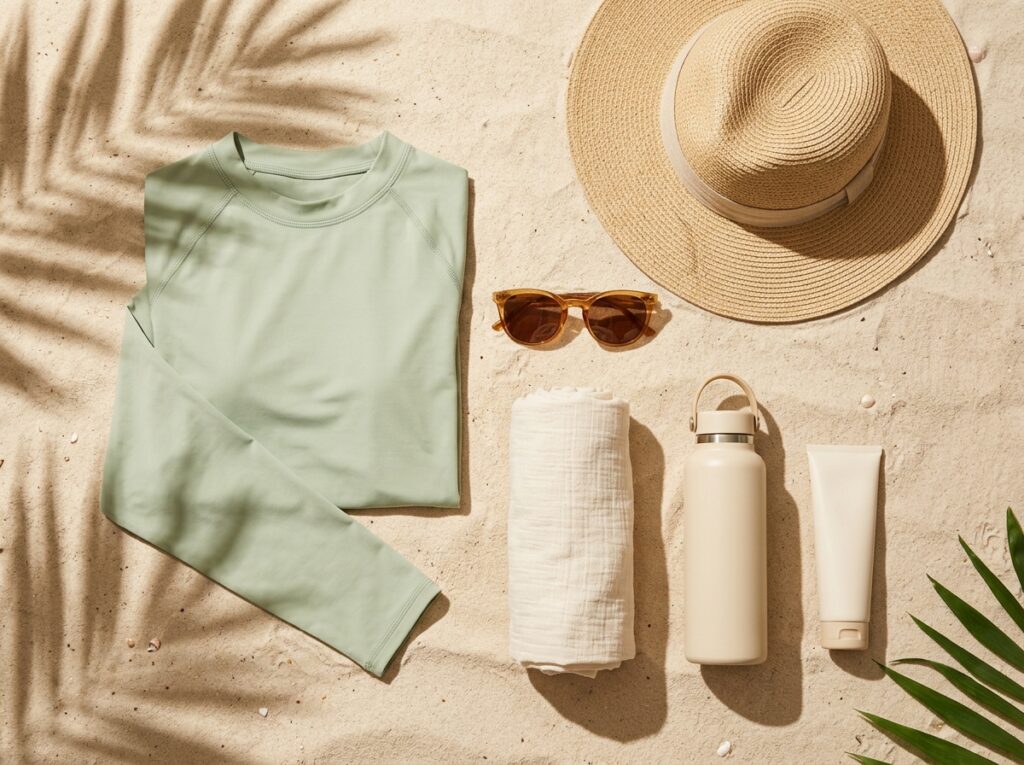
Six hours in the sun sounds harmless until you’re burned by noon and hiding under a towel for the rest of the afternoon. For surfers, swimmers, and anyone planning to stay on the sand, sunscreen alone rarely holds up to sweat, saltwater, and repeated reapplication. That’s where sun-protective clothing changes the equation. A well-chosen rashguard UV surf mans style, for instance, can block UV rays for hours without reapplication, stay put through wipeouts, and keep you in the water longer. But not every piece of sun-protective gear performs the same way. Fabric, fit, UPF rating, and coverage all matter — and getting those details wrong can leave you just as exposed as going bare-skinned.
Quick Answer
Choose sun-protective beach clothing by prioritizing UPF 50 fabric, a snug but non-restrictive fit, long sleeves or full coverage for extended exposure, and quick-drying, chlorine- and saltwater-resistant materials. Darker or tightly woven fabrics block more UV than loose, light-colored knits. For long beach days, pair a UPF-rated long-sleeve top with swim leggings or board shorts, and use sunscreen only on exposed areas like the face, hands, and feet. Reapply sunscreen there every two hours, but the covered skin stays protected without it.
Key Takeaways
- UPF 50 blocks roughly 98% of UV radiation, making it the most reliable fabric rating for extended sun exposure.
- Fit matters as much as fabric: a rashguard that rides up or stretches thin in the water leaves gaps that sunscreen can’t compensate for.
- Dark, tightly woven, stretchy fabrics generally offer better UV protection than light, loose, or worn-out ones.
- Coverage beats reapplication — clothing protects continuously, while sunscreen needs to be reapplied every two hours and after swimming.
- UPF protection fades with wear, stretching, and chlorine exposure, so replace gear that has thinned or lost elasticity.
What UPF Actually Means (And Why It Matters More Than SPF Here)
UPF stands for Ultraviolet Protection Factor, and it measures how much UV radiation passes through fabric to your skin. A UPF 50 rating means only about 1/50th of UV rays penetrate — roughly 98% blocked. That’s a different metric from SPF, which measures how long sunscreen delays sunburn on unprotected skin.
The key difference for beach use: UPF is a property of the fabric itself, not a chemical that wears off. It doesn’t need reapplication, doesn’t wash away in saltwater, and doesn’t degrade from sweat. The catch is that UPF ratings apply only when the fabric is in good condition and used as intended. Stretch a knit rashguard to 120% of its resting size, and UV transmission rises noticeably. Wear it thin, faded, or pilled, and the protection drops too.
A practical rule: if you can see light through a fabric held up to the sun, its UPF is likely lower than the label claims — or it never had a meaningful rating to begin with.
Fabric Types: What Works and What Doesn’t
Not all “sun shirts” are built the same. The material determines how well UV is blocked, how fast it dries, and how it feels after hours of salt and sand.
Polyester and nylon blends are the standard for surf rashguards. They’re stretchy, quick-drying, and hold UPF ratings well when new. Nylon tends to feel softer; polyester tends to be more durable and chlorine-resistant. Blends with a small amount of spandex (usually 10–20%) add the stretch needed for paddling and movement without losing coverage.
Merino wool and bamboo blends appear in some sun-protective apparel, mainly for cooler conditions. They’re comfortable but slower to dry, which matters less for lounging and more for surfing.
Cotton is a poor choice for long beach exposure. A basic white cotton T-shirt offers an effective UPF of around 5–7, and that drops further when wet. Cotton also stays damp, chafes, and offers almost no UV benefit once saturated.
Loose, light-colored weaves — like thin linen or open-knit synthetics — look breezy but let substantial UV through. If coverage is the goal, tighter weaves and darker dyes do more work than fabric weight alone.
Why Fit Is as Important as Fabric
A UPF 50 shirt that rides up, gaps at the wrists, or stretches across the shoulders in the water isn’t delivering UPF 50 to the areas that need it. Fit is where a lot of beach sun protection quietly fails.
Here’s what to look for:
- Snug through the torso and arms, but not restrictive. A rashguard should feel like a second skin, not a compression garment.
- Hem length that stays below the waistband during paddling, duck diving, or reaching overhead.
- Sleeve cuffs that sit at the wrist, not halfway up the forearm.
- Neckline that covers the base of the neck — a high collar or mock neck adds real coverage where sunburn happens most.
For women, long-sleeve swim tops and one-piece suits with UPF fabric eliminate the need to choose between coverage and comfort. For men, long-sleeve rashguards and swim shirts with a relaxed but close cut cover the most skin without restricting movement.
If you’re between sizes, size down for water use and size up for dry lounging. Stretch is the enemy of UPF, and a loose fit in the water creates gaps.
Coverage Strategy: What to Cover, What to Leave Exposed
Clothing can’t cover everything, and it shouldn’t. A practical coverage plan for a long beach day looks like this:
| Body Area | Recommended Coverage | Notes |
|---|---|---|
| Torso and back | UPF 50 long-sleeve rashguard or swim shirt | Highest exposure during paddling |
| Shoulders and arms | Long sleeves with wrist coverage | Shoulders burn fastest; short sleeves leave the forearm exposed |
| Legs | UPF swim leggings or board shorts | Legs are often forgotten; long sessions add up |
| Face and ears | Sunscreen (SPF 30+) plus a hat or surf cap | A hat provides shade but doesn’t replace sunscreen |
| Hands and feet | Sunscreen, reapplied every two hours | Frequently missed and highly exposed |
| Neck | Mock neck or high-collar top; sunscreen on gaps | Avoid sunburn at the collar line |
This combination — clothing for the bulk of the body, sunscreen for the small exposed areas — is the most reliable approach for a full day in the sun. It also reduces the amount of sunscreen you need to carry and reapply, which matters when your hands are covered in wax or sand.
Practical Selection Criteria You Can Apply in the Store
When you’re comparing options, run through these checks before buying:
- Check the UPF rating label. Look for UPF 30 or higher; UPF 50 offers a real margin for extended exposure. If a product doesn’t list a UPF rating, don’t assume it has one.
- Hold fabric up to light. If visible light passes through easily, UV likely does too. This is a quick sanity check, not a precise measurement.
- Stretch the fabric. If it thins dramatically when pulled, its effective UPF drops in use.
- Test the fit at the wrists and hem. Raise your arms overhead. If the shirt rides up or the sleeves pull back, sizing is wrong.
- Consider drying time. Quick-drying synthetics are better for repeated water sessions; slow-drying fabrics stay wet and heavy.
- Check seams and stitching. Flatlock seams reduce chafing during long sessions; rough stitching becomes painful after hours of movement.
- Think about chlorine and salt resistance. If you swim in pools as well as the ocean, chlorine degrades spandex faster than saltwater.
Common Mistakes That Undermine Sun Protection
Even good gear fails when used incorrectly. These are the mistakes that show up most often on the beach:
- Relying on a regular T-shirt. A wet cotton tee offers minimal UV protection and stays damp for hours.
- Assuming all rashguards are UPF 50. Many are designed for chafing, not UV, and carry no verified rating.
- Wearing a rashguard until it’s stretched and thin. UPF degrades with wear; a five-year-old shirt that’s lost its elasticity isn’t protecting you the way it once did.
- Skipping sunscreen on exposed skin. Clothing covers most of the body, but ears, nose, hands, and feet still burn.
- Choosing a loose fit for comfort only. A loose shirt in the water rides up and gaps, exposing the lower back and sides.
- Ignoring UV reflection from sand and water. Even with good coverage, reflected UV reaches the face, neck, and under-chin area.
How Long Does UPF Clothing Actually Last?
There’s no fixed expiration date, but UPF protection declines with use. The main factors that shorten its life:
Stretching: Fabric stretched beyond its natural resting size lets more UV through. A rashguard that’s been pulled on and off hundreds of times loses some of its original density.
Chlorine and saltwater: Both degrade elastic fibers over time, causing the fabric to thin and lose shape.
Washing: Regular machine washing is generally fine, but hot water, harsh detergents, and high-heat drying accelerate wear. Air drying extends the life of UPF garments significantly.
Sun exposure itself: UV degrades many synthetic fibers over time, so a shirt that’s been used hard for multiple seasons may have lower effective UPF than when new.
A reasonable rule: replace sun-protective tops every one to two seasons of heavy use, or sooner if the fabric has thinned, pilled, or lost its stretch. For occasional beach trips, gear can last several years with proper care.
Frequently Asked Questions
Is UPF 50 clothing better than sunscreen?
For covered areas, yes — UPF 50 blocks about 98% of UV continuously without reapplication. Sunscreen is still necessary for exposed skin like the face, hands, and feet, and it must be reapplied every two hours and after swimming. The best approach combines both.
Can I wear a regular T-shirt instead of a rashguard?
A dry, dark, tightly woven cotton T-shirt offers limited protection (roughly UPF 5–10), and that drops further when wet. A UPF-rated rashguard or swim shirt is far more reliable for extended beach exposure.
Do rashguards lose their UV protection over time?
Yes. Stretching, chlorine, saltwater, and repeated washing degrade fabric density, which lowers effective UPF. If the garment has thinned, faded, or lost elasticity, its protection is likely reduced.
Should I size up or down for a sun-protective top?
For water use, size down or choose a snug fit — loose fabric rides up and creates gaps. For dry lounging, a slightly looser fit is fine. Avoid anything so loose that it shifts during activity.
What about sun protection for the face and ears?
Clothing can’t cover everything. Use a broad-spectrum SPF 30+ sunscreen on the face, ears, and neck, reapply every two hours, and consider a surf hat or cap with a brim for additional shade. Reflected UV from sand and water makes these areas especially vulnerable.
How often should I replace sun-protective clothing?
There’s no hard rule, but with heavy use, replacing long-sleeve tops every one to two seasons is reasonable. If the fabric has thinned, pilled, or stretched out, replace it sooner — protection degrades with wear.
Conclusion
For long beach days, the most reliable sun protection isn’t a single product — it’s a system. Start with a UPF 50 long-sleeve top that fits snugly and covers the torso, shoulders, and arms. Add swim leggings or board shorts for the lower body. Then use sunscreen on the small areas clothing can’t reach: face, ears, neck, hands, and feet. Check the UPF label before buying, test the fit with your arms overhead, and replace gear once it thins or loses stretch. Do that, and you’ll spend less time reapplying and more time in the water — which is the whole point.