

Starting your cycling journey feels exciting. You feel the wind on your face and explore new paths. Yet safety always comes first. A good helmet protects your head during falls or accidents.
Studies show the real difference helmets make. Research from the Cochrane Collaboration reveals that helmets cut the risk of head injury by 63% to 88%. They also reduce serious brain injury by up to 60%. For example, a solid bike helmet for beginners offers essential protection without overwhelming new riders. Beginners often skip helmets, but these statistics prove why you should never ride without one.
This guide helps you pick the right helmet. You learn about certifications, types, features, and fit. By the end, you choose confidently and ride safely.
Why Every Beginner Cyclist Needs a Quality Helmet
Cycling brings joy and freedom. However, falls happen to everyone, even on calm rides. Head injuries rank as the top cause of cycling deaths and long-term issues.
Government data backs this up. The National Highway Traffic Safety Administration reports that proper helmets prevent many serious injuries. In addition, a meta-analysis in the International Journal of Epidemiology found helmets lower traumatic brain injury risk by 53%.
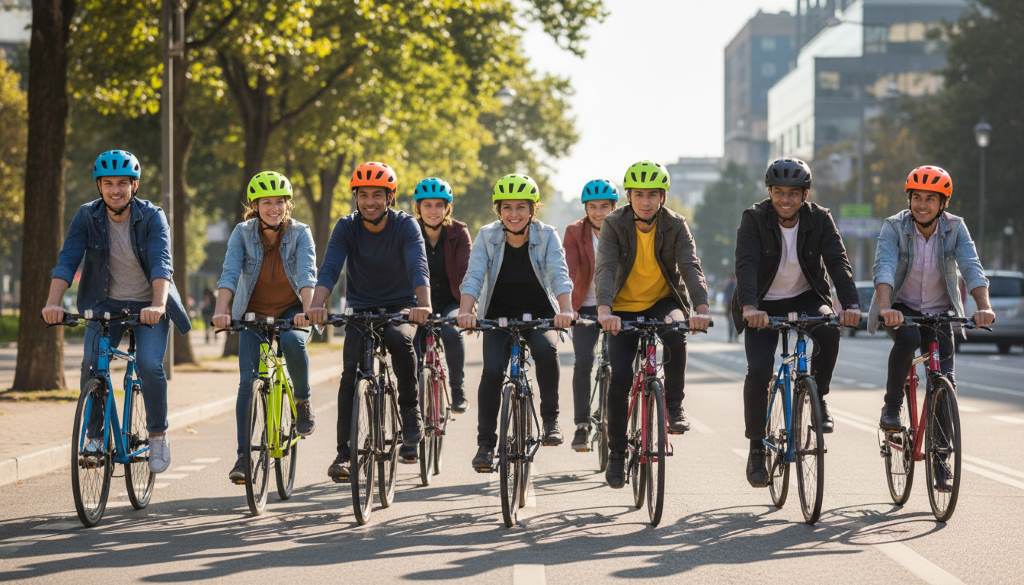
Beginners face higher risks. You still build balance and handling skills. A reliable cycling helmet acts as your first line of defense. Moreover, wearing one builds safe habits from day one.
Helmets do more than protect. They boost confidence. You ride bolder when you know your head stays safe. Plus, many areas require helmets for young riders, and adults benefit just as much.
Understanding Bike Helmet Safety Certifications
Safety starts with certifications. Skip uncertified helmets, no matter how stylish they look.
In the United States, the Consumer Product Safety Commission (CPSC) sets the federal standard. Every helmet sold must meet CPSC rules. These tests cover impact absorption, strap strength, and coverage.
Many brands go further. They earn extra certifications like Snell or ASTM F1447. Virginia Tech runs independent tests and rates helmets with stars. Higher stars mean better real-world protection.
European helmets follow EN 1078 standards. Australian ones meet AS/NZS 2063. All these ensure basic safety.
For beginners, choose at least CPSC-certified models. Then check Virginia Tech ratings for top performers. These steps give you proven protection.
Different Types of Bike Helmets for Beginners
Helmets vary by riding style. Beginners often mix road rides, paths, and commutes. A versatile helmet works best.
Road bike helmets focus on lightness and airflow. They feature many vents and sleek shapes. These suit longer paved rides.
Mountain bike helmets add coverage. They protect the back of the head and include visors for sun and branches. Many offer extra rear protection.
Commuter or recreational helmets blend both worlds. They provide good ventilation, solid coverage, and sometimes light mounts. Beginners love their everyday comfort.
Full-face helmets serve downhill riders. They guard the jaw and face. Most beginners avoid these unless they tackle rough trails.
Start with a recreational or commuter helmet. You gain flexibility as you discover your favorite riding style.
Key Features to Look for in a Beginner Bike Helmet
Modern helmets pack smart features. Beginners benefit from these without complexity.
First, consider MIPS technology. MIPS adds a low-friction layer inside. It lets the helmet rotate slightly on impact. This reduces rotational forces that cause brain injuries. Studies show MIPS lowers strain significantly.
Ventilation matters next. Good vents keep your head cool on warm days. Look for 15 or more openings.
Adjustment systems help too. A dial at the back fine-tunes fit easily. Quality pads wick sweat and add comfort.
Visibility features shine for commuters. Reflective strips or light mounts improve safety in low light.
Weight affects long rides. Lighter helmets reduce neck fatigue. Aim for under 300 grams if possible.
Finally, choose adjustable straps and buckles. They secure the helmet without pinching.
How to Properly Fit Your Bike Helmet
Fit decides everything. A poorly fitted helmet offers little protection.
Follow these steps for perfect fit.
- Measure your head first. Use a tape around your forehead, above the ears. Note the size in centimeters.
- Place the helmet level. The front edge sits one to two fingers above your eyebrows.
- Adjust side straps. They form a V under each ear. Straps stay flat, not twisted.
- Tighten the chin strap. You fit one finger between strap and chin. The buckle centers under your jaw.
- Turn on the dial adjuster. The helmet stays snug but comfortable. It avoids pressure points.
- Test the fit. Shake your head side to side and front to back. The helmet moves minimally. If it rocks, tighten more.
Try several sizes. Brands fit differently. Padding compresses over time, so start snug.
Replace after any crash. Invisible damage weakens protection.
Related:
The Best Hardtail Mountain Bikes Under $500 for Trail Riding
How to Train for a Triathlon: Ultimate Guide to Crush Your Race
Common Mistakes Beginner Cyclists Make When Choosing Helmets
New riders often err in simple ways. Avoid these pitfalls.
Many buy too large helmets. They think room feels comfortable. Actually, loose helmets slip during impacts.
Others tilt helmets back. This exposes the forehead. Always keep it level.
Some chase style over safety. Pretty designs tempt, but check certifications first.
Beginners ignore replacement rules. Helmets last three to five years. Foam degrades with sweat and sun.
Many skip trying helmets on. Online buys save money, but fit suffers. Visit a shop when possible.
Finally, riders forget visibility. Dark helmets blend in traffic. Choose bright colors or add reflectors.
Learn from these mistakes. You pick better and stay safer.
Materials and Construction: What Makes a Helmet Strong
Helmets use specific builds for protection.
Most feature in-mold construction. Makers fuse the outer shell to EPS foam. This creates lightness and strength.
Expanded polystyrene (EPS) foam absorbs impacts. It crushes to spread force.
Polycarbonate shells resist cracks. Higher-end models use carbon for weight savings.
Some add reinforcement cages. These keep shape during crashes.
Ventilation channels direct airflow. Strategic placement cools without weakness.
Beginners need durable builds. In-mold CPSC-certified helmets balance protection and comfort.
Budget Considerations for Beginner Helmets
Quality helmets start affordably. You find solid options in various ranges.
Entry-level certified helmets deliver core protection. They include good fit systems and ventilation.
Mid-range adds MIPS, better pads, and lighter weight. These suit regular riders.
Premium models offer top aerodynamics and materials. Beginners rarely need them early.
Focus on safety over extras. A well-fitted basic helmet beats a fancy loose one.
Shop sales and last-year models. You save without losing protection.
Maintaining and Replacing Your Bike Helmet
Care extends helmet life.
Store away from direct sun. UV rays weaken materials.
Clean with mild soap and water. Avoid harsh chemicals.
Inspect regularly. Check for cracks, dents, or worn straps.
Replace after any impact. Foam compresses permanently.
Swap every three to five years. Sweat and time degrade performance.
Mark purchase date inside. You track age easily.
Proper care keeps protection strong.
Real Stories: How Helmets Saved Beginner Riders
Stories drive the point home.
Sarah started commuting last year. She fell on wet pavement. Her helmet cracked, but her head stayed fine. She rode again days later.
Mike learned on trails. A root caught his wheel. He tumbled, but his helmet took the hit. Doctors praised his quick recovery.
These cases happen often. Helmets turn serious injuries into minor ones.
You join protected riders. Choose wisely and ride confidently.
Conclusion
Choosing the best bike helmet for beginners involves simple steps. Prioritize safety certifications, proper fit, and key features like MIPS and ventilation. Understand types, avoid mistakes, and maintain your gear.
Your helmet becomes your trusted partner. It protects every pedal stroke.
Take action today. Measure your head, visit a shop, and try options. Find your perfect fit and hit the road safely. Happy cycling!
FAQs
What is the most important factor when choosing a bike helmet for beginners?
Fit stands as the top factor. A helmet protects only when it stays secure. Follow measurement and adjustment steps for best results.
Do beginners need MIPS technology in their helmets?
MIPS adds valuable protection against rotational forces. Beginners benefit from it, especially on mixed terrain. Many affordable models include it now.
How often should I replace my cycling helmet?
Replace after any crash. Otherwise, swap every three to five years. Foam degrades over time, even without visible damage.
Are expensive helmets worth it for beginner cyclists?
Basic certified helmets protect well. Spend more for comfort features if you ride often. Safety comes first, not price.
Can I use a mountain bike helmet for road cycling as a beginner?
Yes, absolutely. Mountain helmets offer extra coverage. They work fine on roads and give versatile protection for new riders.
References
- Cochrane Review on Helmets for preventing head and facial injuries in bicyclists: https://pmc.ncbi.nlm.nih.gov/articles/PMC7025438
- Consumer Product Safety Commission Bicycle Helmets Guidance: https://www.cpsc.gov/Business–Manufacturing/Business-Education/Business-Guidance/Bicycle-Helmets
- Virginia Tech Bicycle Helmet Ratings: https://www.helmet.beam.vt.edu/bicycle-helmet-ratings.html
- MIPS Official Explanation: https://mipsprotection.com/helmet-technology