

Imagine racing across rugged islands, plunging into icy waters, and sprinting through dense forests, all in one event. This is SwimRun, a thrilling endurance sport that blends swimming and running in a seamless, heart-pounding adventure. The origin of SwimRun traces back to Sweden’s stunning archipelago, where a daring bet sparked a global phenomenon. Combining raw athleticism with nature’s challenges, SwimRun pushes athletes to their limits. In this blog post, we’ll explore how this unique sport began, its evolution, and why it captivates adventurers worldwide. Join us as we dive into the story behind SwimRun’s origin and uncover what makes it so special.
A Bet That Changed Everything
In 2002, a late-night conversation in a Stockholm bar set the stage for SwimRun’s origin. Anders Malm, owner of Utö Värdshus, and his friend Janne Lindberg, along with the Andersson brothers, made a bold wager. They challenged each other to race across the Stockholm archipelago, from Sandhamn to Utö, covering 75 kilometers across 26 islands. The rules were simple: the last team of two to reach the finish line paid for hotel, dinner, and drinks. They had to pass three restaurants en route, with the trailing team covering the tab for whatever the leading team ordered.
The next morning, two teams embarked on this grueling challenge, alternating between swimming and running. It took over 24 hours, leaving them too exhausted to celebrate. Yet, this impromptu race planted the seed for SwimRun. According to ÖTILLÖ’s official history, this event, born from a drunken bet, laid the foundation for a sport that would captivate endurance athletes globally. The raw challenge of navigating islands and waters sparked a new kind of adventure.
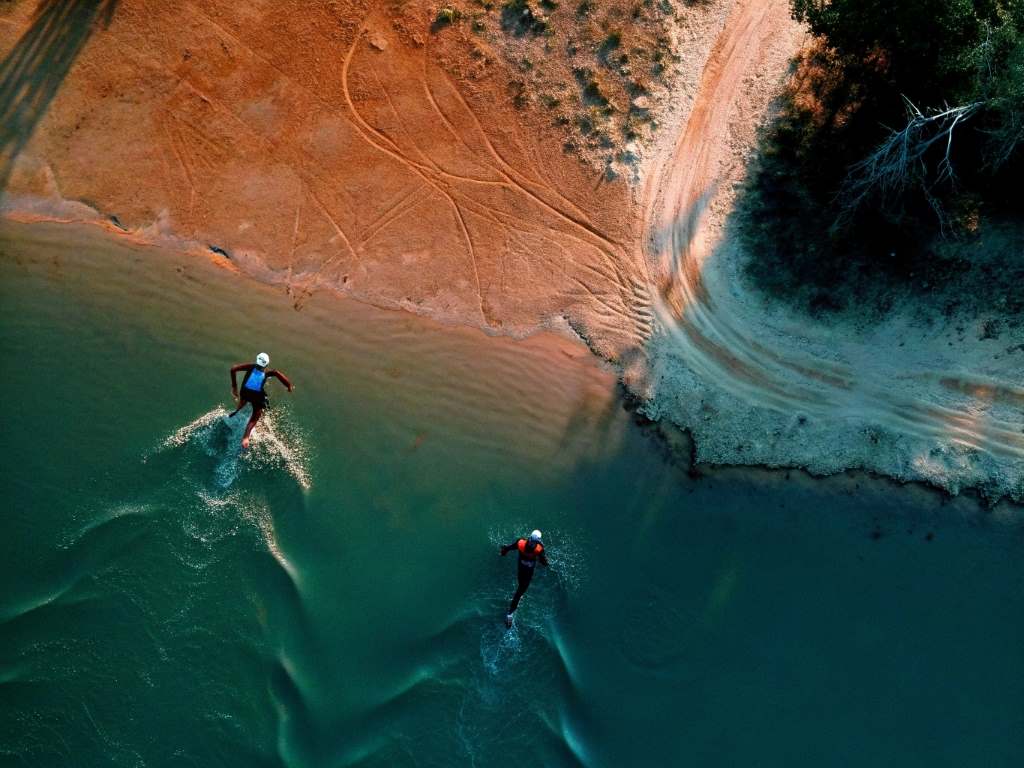
The Birth of ÖTILLÖ: Island to Island
By 2006, the original bet evolved into a formal race called ÖTILLÖ, meaning “island to island” in Swedish. Michael Lemmel and Mats Skott, experienced adventure racers, were approached to commercialize the challenge. Initially hesitant, they saw potential in its unique format. They organized the first official ÖTILLÖ race, keeping Utö as the finish line and Sandhamn as the start. Only 11 teams participated, and just two finished within the time limit, highlighting the race’s brutal difficulty.
The event’s format was unlike anything else. Athletes ran and swam multiple segments, carrying all gear, including wetsuits and shoes. According to CNN, ÖTILLÖ is one of the toughest one-day endurance races globally, a testament to its demanding nature. This grueling setup attracted athletes craving a raw connection with nature. ÖTILLÖ’s success marked the true origin of SwimRun as a structured sport, inspiring a global movement.
Naming the Sport: SwimRun Takes Shape
In 2011, the sport officially got its name. Erika Rosenbaum, a podium finisher at ÖTILLÖ, suggested calling it “SwimRun” to Michael Lemmel. The simplicity of the name captured the essence of alternating between swimming and running without transitions. Unlike triathlons, where athletes change gear, SwimRun requires carrying everything, adding strategic depth. This defining feature set SwimRun apart, making it both accessible and uniquely challenging.
The name SwimRun stuck, and the sport began to grow. By 2014, races like Aquaticrunner in Italy and Rockman in Norway emerged, expanding SwimRun’s reach. According to the World of Swimrun, over 500 races now take place globally, showcasing its rising popularity. The sport’s appeal lies in its blend of teamwork, nature, and endurance, drawing athletes from diverse backgrounds. My first SwimRun event in 2019 was a humbling experience, teaching me the importance of preparation and respect for nature’s unpredictability.
Gear and Grit: The Evolution of SwimRun
SwimRun’s evolution brought innovation in gear and strategy. Early racers used basic wetsuits and running shoes, but specialized equipment soon emerged. SwimRun wetsuits, like those from Zone3, offer flexibility for swimming and breathability for running. Athletes also use pull buoys and hand paddles to enhance performance. According to a 2024 SUMARPO guide, choosing the right wetsuit thickness (1.5–3mm) is crucial for balancing buoyancy and mobility in varying water temperatures.
The sport’s growth also introduced solo races, though teams of two remain the norm, often tethered for safety. My teammate and I once struggled with a tether during a chilly lake swim, learning firsthand how trust and communication are vital. These innovations made SwimRun more accessible, allowing beginners and veterans alike to tackle its challenges. Today, events vary from sprints (7–15 km) to ultra-distances (over 75 km), catering to all levels.
A Global Phenomenon: SwimRun’s Spread
From its Swedish roots, SwimRun has become a global sensation. By 2015, races appeared in Australia, Russia, and the U.S., with events like Swimrun Australia and Canaqua Sports’ Mudskipper Challenge. The sport’s appeal lies in its connection to nature and its inclusive formats. According to Swimrun Advice, over 50 countries now host events, with Europe alone boasting 200+ races in 2025. This growth reflects SwimRun’s universal draw: the thrill of adventure and teamwork.
Races like Engadin in Switzerland and Whistler in Canada showcase stunning landscapes, attracting diverse athletes. I recall the awe of running through a forest trail during a local sprint race, feeling alive amidst nature’s beauty. SwimRun’s global spread has fostered a passionate community, with training groups and events welcoming newcomers. Its accessibility ensures anyone with grit and determination can join the adventure.
Why SwimRun Captivates Athletes
SwimRun’s allure comes from its raw, unfiltered challenge. Unlike structured races, it demands adaptability to unpredictable terrains and weather. The sport fosters camaraderie, especially in team formats, where partners rely on each other. A 2023 Juje article notes that SwimRun’s unique format builds strong bonds, as teammates navigate challenges together. This sense of unity, combined with nature’s backdrop, makes every race unforgettable.
For many, SwimRun is a rebellion against digital life. As ÖTILLÖ’s Dominik Leu says, it’s an “antidote to our digital daily lives.” My first race taught me to embrace the moment, leaving behind screens and stress. Whether you’re a beginner or a pro, SwimRun offers a chance to push limits and connect with nature. Its origin as a bold bet continues to inspire athletes to take on the wild.
Conclusion
The origin of SwimRun is a tale of adventure, born from a daring bet in Sweden’s archipelago. From that 2002 challenge to the global phenomenon it is today, SwimRun embodies endurance, teamwork, and nature’s beauty. Its evolution from ÖTILLÖ to a sport with thousands of races reflects its universal appeal. Whether you’re drawn to its history or its thrill, SwimRun invites you to dive in and test your limits. Have you tried SwimRun or want to? Share your thoughts in the comments or spread this story with friends. Explore more at ÖTILLÖ Swimrun and start your adventure!
FAQs
What is the origin of SwimRun?
SwimRun began in 2002 in Sweden when friends bet to race across the Stockholm archipelago, leading to the ÖTILLÖ race in 2006.
Who named the sport SwimRun?
Erika Rosenbaum, a 2011 ÖTILLÖ podium finisher, coined the term “SwimRun,” capturing its alternating swim-and-run format.
What gear is essential for SwimRun?
A SwimRun wetsuit, quick-drying shoes, goggles, and a swim cap are key. Some use pull buoys and hand paddles.
How does SwimRun differ from triathlon?
SwimRun involves multiple swim-run segments without gear changes, unlike triathlons, which have distinct transitions between disciplines.
Where can I find SwimRun events?
Follow Swimrun Advice for global event calendars, including Europe and the USA, updated for 2025.